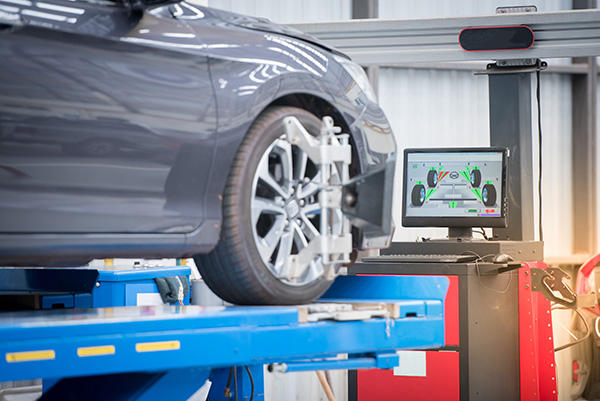
A car does not have to drift left or right to need an alignment. Pulling is one sign of an alignment problem, but it is far from the only one. We regularly see vehicles that track straight down the road while the tires are wearing unevenly because one or more alignment angles are outside specification.
That is why steering feel alone does not tell the whole story. Camber, toe, and caster all affect how the tires meet the road, and some of those angles can be wrong without creating an obvious pull. By the time the driver notices a problem, the tires may already have lost a significant amount of usable tread.
Uneven Tire Wear Can Happen Without Any Pulling
One of the clearest signs of an alignment problem is a tire wearing faster on one edge than the other. Inside-edge wear is especially easy to miss because it can hide behind the wheel where you do not see it during a quick walk around the car.
A vehicle can still drive straight if the alignment angles on both sides are off similarly. For example, excessive toe can scrub both front tires across the pavement without steering the car noticeably in either direction. During an inspection, we look across the full width of the tread instead of checking only the easiest area to see.
Toe Problems Can Destroy Tires Quickly
Toe describes whether the tires point slightly toward or away from each other when viewed from above. The adjustment is small, but the effect on tire life can be large.
If the toe is too far out of specification, the tires are dragged slightly sideways every time the vehicle moves. That can create feathered tread, accelerated wear, and more rolling resistance even though the steering wheel feels normal. Drivers are sometimes surprised to find badly worn tires on a car that never pulled at all.
A Crooked Steering Wheel Is Another Warning
If the car drives straight but the steering wheel sits slightly off-center, the alignment deserves attention. You should not have to hold the wheel noticeably left or right to travel straight on a level road.
An off-center steering wheel can come from incorrect toe settings, previous suspension work, or an alignment that was never finished correctly. It can also appear after a curb or pothole impact. We check the actual alignment readings rather than simply centering the steering wheel and assuming the problem is solved.
Potholes and Curb Strikes Can Change Alignment
You do not need a major collision to knock alignment angles out of specification. A hard pothole hit, curb strike, or rough road impact can shift a suspension component enough to change how the tire sits on the road.
Sometimes the driver notices the change immediately. Other times the vehicle still feels normal, but tire wear starts developing over the next few thousand miles. If you know the car took a hard hit, and the steering or tire wear seems different afterward, checking the alignment is cheaper than finding out later that the tires have been damaged.
Worn Suspension Parts Can Make an Alignment Impossible to Hold
Alignment settings depend on suspension parts staying in the position where they are adjusted. Worn ball joints, control arm bushings, tie rods, or wheel bearings can allow movement that changes alignment while the vehicle is driving.
That is why we check for looseness before making adjustments. Aligning a vehicle with worn suspension parts can produce good numbers on the machine for a moment, but those numbers will not stay accurate once the car is back on the road. The worn component has to be repaired first if it is allowing excessive movement.
New Tires Are a Good Time to Check Alignment
Installing new tires without checking alignment can put fresh tread into the same conditions that damaged the old set. If the previous tires show feathering, inside-edge wear, or another unusual pattern, we want to know why before the new tires start wearing the same way.
Regular maintenance around tire service helps catch these problems early. An alignment check is especially worthwhile after suspension repairs, steering work, pothole damage, or any time the old tires wore unevenly. Protecting a new set of tires is easier than trying to recover tread that has already been scrubbed away.
Alignment Also Affects Steering and Fuel Use
Poor alignment can increase rolling resistance because the tires are not traveling in the exact direction the vehicle is moving. The engine then has to work against that extra drag.
You may notice the steering feels less precise, the wheel does not return to center cleanly, or the vehicle feels slightly nervous on the highway. None of those symptoms have to include a strong pull. Alignment problems can be subtle, which is why measuring the angles tells us more than relying only on how the car feels during a short drive.
Get Wheel Alignment Service In Suwanee and Decatur, GA, With Neighborhood Tire Pros
If your tires are wearing unevenly, the steering wheel is off-center, or the vehicle recently hit a pothole or curb, Neighborhood Tire Pros can check alignment at its Suwanee, GA, and Decatur, GA, locations.
Schedule an alignment check before a problem you cannot feel starts costing you tire life.