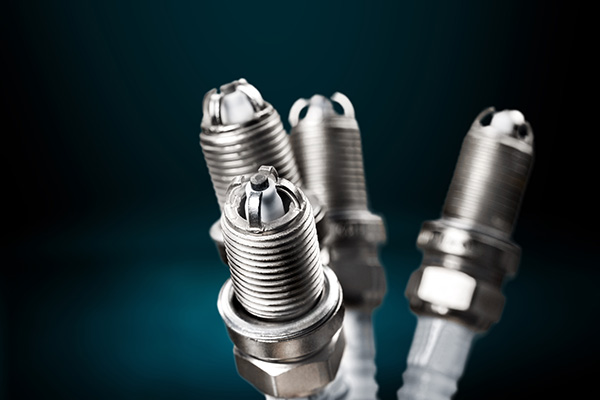
When spark plugs start wearing out, the changes are usually small at first. Maybe the engine feels a little lazier, fuel mileage is not quite what it used to be, or the idle has a slight stumble on cold mornings. Because the car still starts and drives, it is easy to ignore those early hints.
Paying attention to them and replacing plugs on time can prevent bigger issues with ignition coils, catalytic converters, and drivability down the road.
What Spark Plugs Do Every Time You Start The Engine
Spark plugs sit at the end of each cylinder, creating the spark that ignites the air-fuel mixture. They have to fire thousands of times per minute, under high heat and pressure, without misfiring. Over time, the center electrode and ground strap wear away, the gap opens up, and deposits build on the insulator.
As the gap grows, the ignition system has to work harder to jump the distance. That extra strain shows up as a weak spark, occasional misfires, or coils working at their limit. Even if the engine still runs, it may no longer be running as cleanly or efficiently as it did with fresh plugs.
Early Symptoms of Worn Spark Plugs
Worn plugs usually start with subtle signs rather than a complete failure. You may notice the engine takes a few extra turns to start, especially when it is cold. The idle can feel slightly rough or uneven at stoplights, and the tachometer needle may twitch more than it used to.
On the road, the car might hesitate for a moment when you accelerate or feel less responsive climbing hills. Some drivers see a small drop in fuel economy that is hard to explain any other way. If a plug is badly worn or fouled, the check engine light can come on with misfire codes, even though the engine still seems to run “ok” most of the time.
How Worn Plugs Affect Performance and Fuel Economy
As spark plugs wear, the ignition system has to work harder to fire each cylinder. That shows up in several ways you can feel from the driver’s seat:
- Slower throttle response when merging or passing
- Occasional hesitation or stumbling under moderate to hard acceleration
- Noticeable loss of power when climbing grades or carrying passengers
- Roughness or mild surging at steady highway speeds
- Gradual decrease in miles per gallon despite similar driving habits
None of these guarantee spark plugs are the only issue, but together they are strong clues that the ignition side deserves a closer look. When we see this pattern, plugs are usually high on the list of suspects.
Other Problems That Can Look Like Bad Spark Plugs
Not every misfire or hesitation is caused by worn plugs, which is why guessing can get expensive. Weak ignition coils, cracked plug wires or boots, and failing coil-on-plug units can all create similar symptoms. Fuel delivery issues, such as a weak pump or dirty injectors, can cause the same kind of stumble under load.
Vacuum leaks and sensor problems sometimes mimic ignition issues as well. The engine computer may set misfire codes, but the root cause is unmetered air or incorrect fuel trimming. A proper inspection usually includes checking plug condition, measuring gaps, and verifying that coils and fuel trims look healthy before deciding what to replace.
Why Timely Spark Plug Service Is So Important
Manufacturers set spark plug intervals based on the type of plug and the way the engine is designed. Many modern spark plugs are rated for 60,000 to 100,000 miles, but that assumes normal conditions and a healthy engine. Waiting far beyond that range gives electrodes more time to wear, gaps more time to open, and deposits more time to build up.
When plugs are ignored long enough, coils can overwork and fail, turning what could have been a straightforward plug job into a coil and plug replacement. Long-term misfires can also overheat catalytic converters, which are far more expensive than routine ignition service. Keeping up with plug intervals is one of those relatively small maintenance steps that protect some very costly parts.
Simple Ways Drivers Can Help Plugs Last Longer
Spark plugs will wear over time, no matter what, but a few habits can help them stay cleaner and last closer to their intended service life. Using quality fuel and avoiding constant short trips lets the engine reach full temperature more often, which helps burn off light deposits. Fixing oil or coolant leaks that reach the plugs prevents fouling and early failure.
It also helps to address check engine lights sooner rather than later. If a sensor issue or fuel problem is making the mixture overly rich, plugs will foul much faster than they should. When we inspect a vehicle, we like to look at plug condition in context with how the car is driven, so we can recommend an interval that makes sense, not just a generic number.
Get Spark Plug Service in Suwanee and Decatur, GA with Neighborhood Tire Pros
We can inspect your spark plugs, ignition coils, and related components, then show you exactly how wear is affecting performance. We explain whether you are due for replacement now or can plan it for a future visit, and we use the correct plugs for your specific engine so you get smooth starts and strong power.
Call Neighborhood Tire Pros in Suwanee and Decatur, GA, to schedule spark plug service and keep your engine running clean and responsive.
- 2115 Lawrenceville Suwanee Rd Suwanee, GA
- 3589 Memorial Drive Decatur, GA
- 307 Clairemont Avenue Decatur, GA
- 557 Johnson Ferry Road Marietta, GA