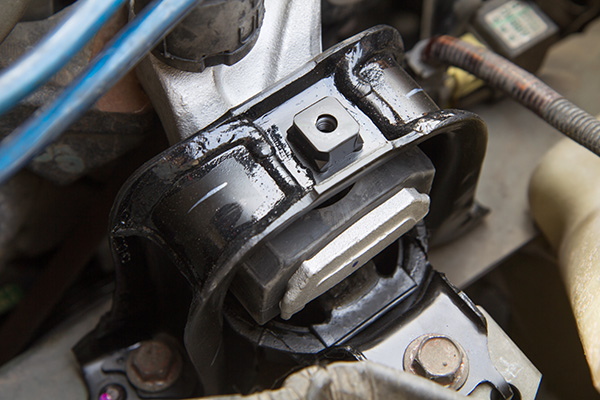
Engine mounts are not parts most drivers think about. They sit quietly between the engine, transmission, and vehicle frame, doing a job that is easy to overlook until they stop doing it well. Then the car starts feeling rough in ways that can be hard to describe.
A worn engine mount can make a vehicle shake at idle, thump when shifting, jerk when accelerating, or feel like the engine is moving around under the hood. The engine may run perfectly fine, but the car still feels harsh because the mount is no longer holding and absorbing movement the way it should.
What Engine Mounts Actually Do
An engine is not bolted directly to the vehicle frame with solid metal connections. If it were, every vibration from combustion, shifting, and acceleration would travel straight into the cabin. Engine mounts hold the engine in place while also absorbing vibration.
Most mounts use rubber, hydraulic fluid, or a combination of materials to cushion movement. Some vehicles also use electronically controlled mounts that adjust based on driving conditions. No matter the design, the goal is the same: keep the engine secure without letting every vibration reach the driver.
Over time, mounts can crack, collapse, leak, or separate. Heat, oil leaks, age, engine movement, hard acceleration, and normal mileage all wear them down.
Why A Bad Mount Makes The Car Feel Rough
When a mount weakens, it can no longer isolate engine vibration. That vibration travels into the steering wheel, seat, pedals, dashboard, or floor. The engine may be running normally, but the cabin feels rough because the mount is no longer absorbing the movement.
This is why engine mount problems are sometimes mistaken for misfires. A misfire makes the engine run unevenly. A bad mount can make a normally running engine feel uneven from inside the vehicle. The difference matters because replacing spark plugs or coils will not fix vibration caused by a collapsed mount.
A proper inspection helps distinguish engine performance issues from mounting problems.
Thumping During Gear Changes
One of the more obvious mount symptoms is a thump when shifting from park to drive, drive to reverse, or during acceleration. The engine and transmission naturally twist slightly when torque is applied. Good mounts control that movement. Weak mounts allow too much of it.
That extra movement can feel like a dull knock or bump. It may happen when taking off from a stop, backing out of a parking space, or letting off the gas after accelerating. On some vehicles, the sound is more noticeable when the A/C is on because the engine is under a little extra load.
That thump should not be ignored. Excess engine movement can stress hoses, wiring, exhaust parts, axles, and other connected components.
Vibration At Idle
A bad engine mount often shows up at idle because there is less road noise to hide it. You may feel shaking while stopped at a light, sitting in gear, or waiting in a drive-through. The vibration may get worse when the vehicle is in drive with your foot on the brake.
Some mounts carry more load than others depending on engine layout. If one mount collapses, the engine may sit slightly lower or lean more than it should. That change can send vibrations through the car's body.
Idle vibration can also be caused by engine problems, dirty throttle parts, ignition issues, vacuum leaks, or a low idle speed. That is why the mount should be checked along with engine performance data, rather than assuming the cause from vibration alone.
Signs Engine Mounts May Be Wearing Out
Engine mount symptoms can be subtle at first, then become more noticeable as the rubber separates or the mount collapses.
- The cabin shakes at idle even though the engine does not seem to be misfiring, which can indicate vibration is being transmitted through the body rather than absorbed.
- A clunk or thump happens when shifting into drive or reverse because the engine moves more than it should when torque is applied.
- The vehicle jerks during acceleration or when letting off the gas, especially at low speeds, where engine movement is more noticeable.
- You see cracked rubber, leaking fluid from a hydraulic mount, or excessive engine movement during a controlled test.
- Exhaust, hoses, or wiring appear stressed because the engine is shifting farther than the connected parts were designed to handle.
These clues are useful, but the mounts still need to be checked directly. Some vehicles have several mounts, and one bad mount can make the others work harder.
Can Bad Mounts Damage Other Parts?
Yes, worn mounts can create problems beyond vibration. When the engine moves too much, it can tug on hoses, wiring harnesses, intake tubes, exhaust flex pipes, and drivetrain parts. Over time, that extra movement can crack rubber parts, loosen connections, or create noises that seem unrelated.
A weak transmission mount can also create similar symptoms. Since the engine and transmission work as a unit, both should be checked. Replacing one mount while ignoring another collapsed mount may leave the vehicle feeling only partly repaired.
Regular maintenance visits are a good time to spot oil leaks or worn rubber before the mount fully fails. Oil leaking onto rubber mounts can accelerate deterioration, especially if the leak has been present for a while.
Why Testing Matters Before Replacing Mounts
Engine mount diagnosis should include more than a quick glance. The technician may inspect the rubber, check for fluid leakage, check engine movement under load, listen for gear engagement, and confirm that the engine is running properly.
That last part is important. A rough-running engine can damage mounts faster because it shakes more than it should. On the other hand, a bad mount can make a healthy engine feel rough. The inspection needs to separate those two possibilities.
Once the failed mount is identified, the repair plan may also include checking related mounts, leaks, exhaust movement, and drivetrain parts that may have been stressed.
Get Engine Mount Repair In Suwanee And Decatur, GA, With Neighborhood Tire Pros
If your vehicle shakes at idle, thumps when shifting, jerks during acceleration, or feels rough even when the engine seems to run normally, Neighborhood Tire Pros in Suwanee and Decatur, GA, can inspect the engine mounts and related parts.
For engine mount repair before extra movement damages nearby components, contact us to schedule an appointment.