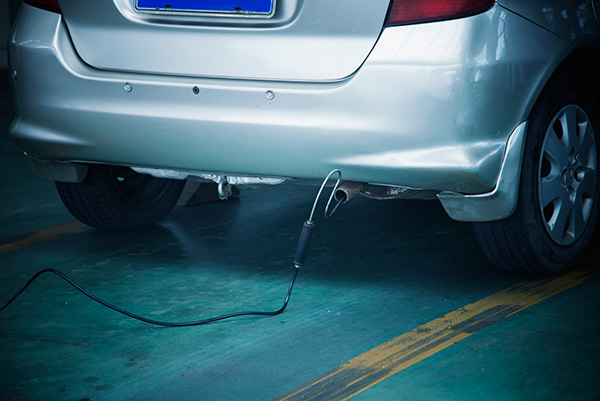
An emissions test can feel like a simple yearly step until the vehicle fails. The frustrating part is that many emissions problems do not make the car feel terrible right away. It may start fine, drive normally, and still have a fault that shows up during testing.
Most failures come back to the same basic idea. The vehicle is either producing excessive emissions, failing a required self-check, or missing a part the system expects to find.
1. Check Engine Light Is On
A check engine light is one of the most common reasons a vehicle fails an emissions test. Even if the car feels fine, the computer has stored a fault that needs attention. The issue could be related to fuel control, ignition, sensors, emissions equipment, or the evaporative system.
Clearing the light right before testing is not a real fix. The monitors need time to reset, and if the problem persists, the light will return. A proper inspection helps identify the cause rather than just erasing the warning for a short time.
2. Faulty Oxygen Sensor
Oxygen sensors help the engine computer adjust the air-to-fuel ratio. When a sensor reads slowly or incorrectly, the engine can run too rich or too lean. That can raise emissions, lower fuel economy, and eventually damage other parts.
An oxygen sensor code does not always mean the sensor itself is the only problem. A vacuum leak, exhaust leak, fuel issue, or misfire can affect the reading. Testing matters because replacing the wrong part can leave the same emissions repair waiting afterward.
3. Loose Or Failing Gas Cap
A gas cap may seem too small to cause an emissions failure, but it is part of the evaporative emissions system. The fuel system must seal properly so that fuel vapors do not escape into the air. If the cap is loose, cracked, missing, or unable to seal, the system can fail its self-check.
This is one of the simpler problems when caught early. The tricky part is that a bad cap can still trigger a check engine light and make the vehicle fail until the issue is corrected and the system completes its readiness checks.
4. Evaporative Emissions System Leaks
The EVAP system controls fuel vapors from the tank and returns them to the engine for combustion. Small leaks in hoses, valves, charcoal canisters, or seals can trigger emissions faults. These leaks are not always easy to smell or see.
Drivers may notice nothing except a warning light. That is why EVAP problems can be annoying. The system may need a smoke test or other diagnostic checks to find the exact leak before the vehicle can pass.
5. Misfires From Spark Plugs Or Ignition Coils
A misfire means one or more cylinders are not burning fuel correctly. Worn spark plugs, weak ignition coils, bad wires on some vehicles, or fuel delivery issues can all cause it. A misfire can raise emissions quickly because unburned fuel can enter the exhaust.
If the check engine light flashes, the problem is more urgent. Continued driving can damage the catalytic converter. Regular maintenance helps prevent many ignition-related failures by keeping spark plugs and related parts from exceeding their service life.
6. Catalytic Converter Problems
The catalytic converter helps clean up exhaust before it leaves the tailpipe. If it is damaged, missing, clogged, or no longer working efficiently, the vehicle can fail emissions testing. A failing converter may also cause poor acceleration, heat issues, rattling, or a sulfur-like smell.
The converter is expensive, so the cause needs to be understood before replacement. Misfires, oil burning, rich fuel mixture, and ignored engine problems can all shorten converter life. If those issues are not corrected, a new converter can be damaged too.
7. Readiness Monitors Are Not Set
Modern vehicles run self-tests called readiness monitors. These monitors check emissions-related systems while the vehicle is driven under certain conditions. If the battery was recently disconnected, codes were cleared, or repairs were just completed, the monitors may not be ready yet.
A vehicle can fail or be rejected from testing even if no active warning light is on. It simply has not completed the required checks. After repairs, the vehicle needs enough drive time for the computer to confirm the systems are working properly.
8. Dirty Airflow Or Fuel System Issues
Airflow and fuel delivery problems can affect emissions even when the vehicle still feels drivable. A dirty mass airflow sensor, a clogged air filter, a vacuum leak, dirty injectors, or a fuel trim problem can throw the engine out of balance. That usually means higher emissions and less efficient combustion.
These problems can also lead to rough idle, hesitation, lower fuel economy, or a dashboard light. A focused inspection can determine whether the issue is air, fuel, ignition, or sensor-related before parts are replaced.
Get Emissions Repair In Georgia, With Neighborhood Tire Pros
If your vehicle fails an emissions test or has a warning light that could affect testing, Neighborhood Tire Pros can help drivers in Suwanee, Decatur, and the surrounding Georgia service areas find the cause and complete the needed repair.
Bring it in before the registration deadline, when a small emissions issue can turn into a rushed repair.