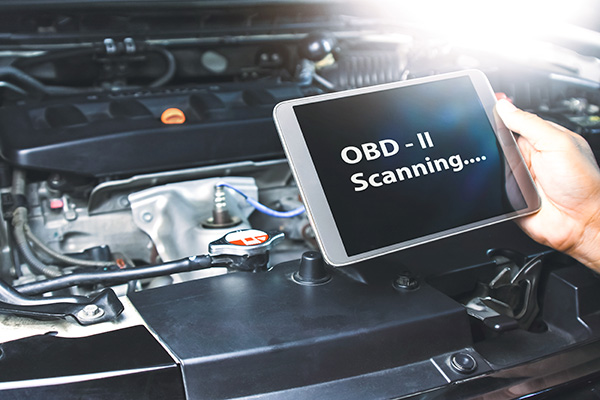
A check engine light can feel vague on purpose. It tells you the car has found a problem, but it does not explain from the driver’s seat whether the issue is minor, expensive, urgent, or still in its early stages. The car might feel normal, or it might be running rough enough that you already know something is off.
That is where a professional engine diagnostic helps. It gives the technician real information from the vehicle’s computer, then pairs that information with testing under the hood. The goal is not just to turn the light off. It is to find out why the light came on in the first place.
The Trouble Code Gives Direction
When the check engine light turns on, the vehicle stores one or more trouble codes. These codes point to the system that detected something outside the expected range. The code might involve a misfire, oxygen sensor reading, EVAP leak, catalytic converter efficiency, fuel trim, airflow sensor, or coolant temperature problem.
That code is valuable, but it is not the full answer. A code tells the technician where to begin looking. It does not always tell you which exact part failed. Treating a code like a parts list can lead to wasted money and a light that comes right back on.
Live Data Shows What The Engine Is Doing
A professional engine diagnostic can include live data from the vehicle while it is running. That means the technician can watch sensor readings, fuel trims, engine temperature, oxygen sensor activity, misfire counters, voltage, and airflow information in real time.
Live data helps show whether the problem is active now or only happens under certain conditions. For example, a sensor might read normally at idle but drift out of range during acceleration. A misfire might only show up under load. Those details help narrow the repair much better than a quick scan alone.
Freeze-Frame Data Captures The Moment
Many vehicles save freeze-frame data when a check engine light fault is recorded. That is a snapshot of what was happening when the problem appeared. It can include vehicle speed, RPM, engine load, coolant temperature, fuel trim, and other important readings.
This information helps explain the setting around the fault. A code that appears during a cold start points in a different direction than one that appears during highway driving. A fault that sets while idling may not have the same cause as one that sets under heavy acceleration. The context can make the testing more focused.
Testing Confirms The Actual Cause
The scan tool is only part of the process. A professional engine diagnostic also needs hands-on testing. That can include checking spark plugs, ignition coils, fuel pressure, vacuum leaks, wiring, connectors, compression, intake parts, or exhaust leaks, depending on what the data shows.
This step is where many wrong repairs are avoided. An oxygen sensor code can be caused by a bad sensor, but it can also be due to a vacuum leak, an exhaust leak, a fuel delivery problem, or a misfire. A misfire code can come from ignition parts, fuel injectors, air leaks, or internal engine trouble. Testing confirms the source before parts are replaced.
A Diagnostic Can Show How Serious The Problem Is
Not every check engine light carries the same urgency. A steady light with no drivability change still needs attention, but it may not mean the vehicle has to stop immediately. A flashing check engine light is more serious because it can indicate an active misfire that could damage the catalytic converter.
Professional testing can help separate a warning that needs scheduled service from one that needs faster action. It can also show whether the car is safe to drive short distances or whether continuing to drive could worsen the repair. That kind of clarity is one of the biggest benefits for drivers.
Small Problems Can Be Caught Earlier
A check engine light can turn on before the vehicle feels different. The computer may see a fuel mixture correction, sensor pattern, small leak, or early misfire before the driver notices anything unusual. That early information can be useful if it is checked soon enough.
Regular maintenance also helps, as small service issues can lead to larger problems later. Worn spark plugs, dirty filters, weak batteries, old fluids, and small leaks can all affect how the engine runs. An inspection tied to the diagnostic process helps connect the warning light to the real condition of the vehicle.
Get Engine Diagnostic Service In Georgia, With Neighborhood Tire Pros
If your check engine light is on, Neighborhood Tire Pros can perform engine diagnostic testing and a full inspection at our Suwanee, GA, and Decatur, GA, locations.
To find out what your vehicle is trying to tell you before the problem gets harder to solve, contact us to schedule an appointment.